
What to Expect When You Replace Conservatory Windows in a Sunroom
How to Decide Whether Sunroom Windows Need Replacing
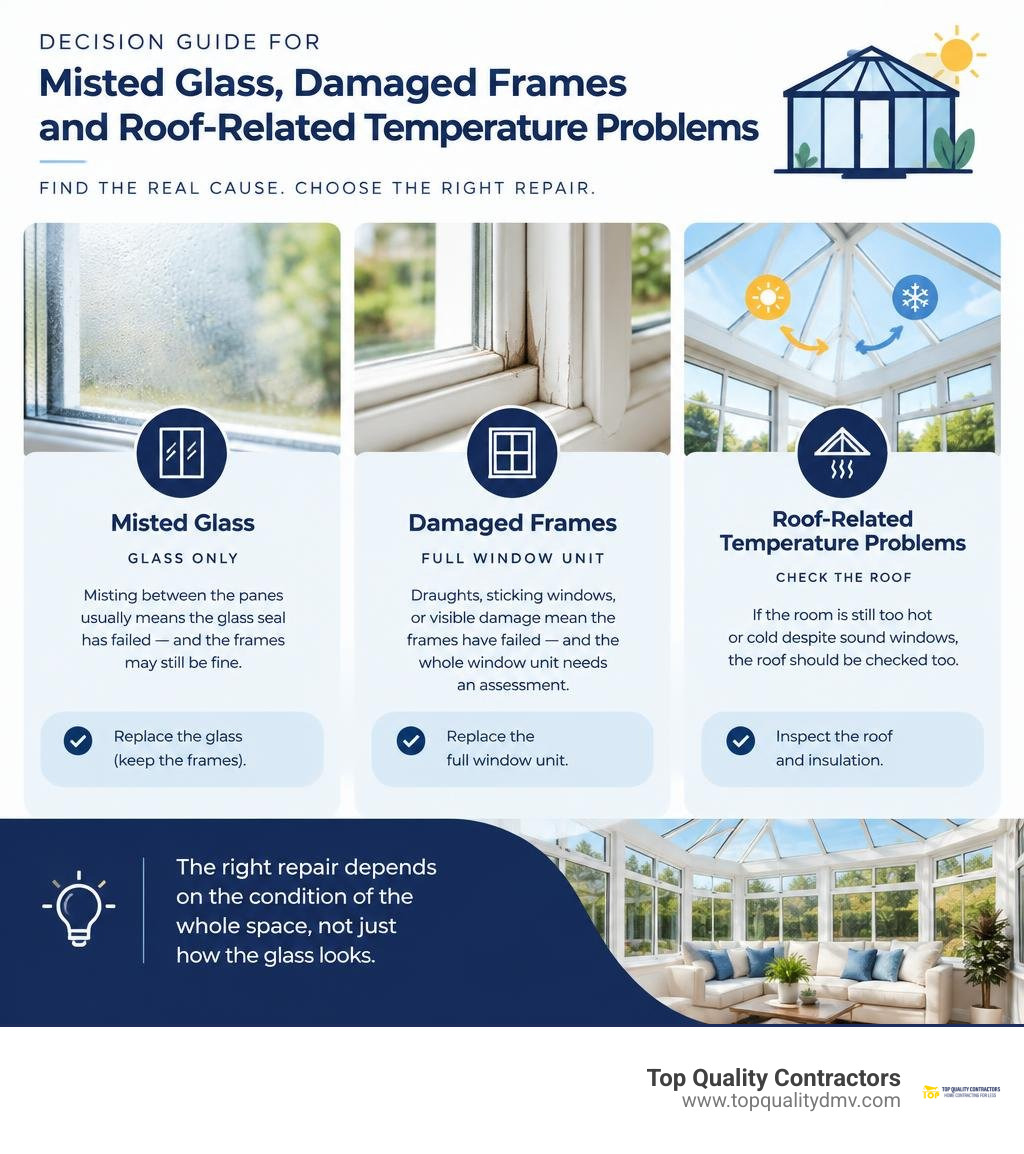
For conservatory window replacement, the first step is to find out whether the glass, the frame, or both have failed. A Maryland homeowner with misting between the panes and sound frames may need only replacement glass. Draughts, sticking windows, or damaged frames call for an assessment of the full window unit. If the room is still too hot or cold despite sound windows, the roof should be checked too.
In this guide, conservatory means a glass-heavy sunroom. The right repair depends on the condition of the whole space, not just how the glass looks.
Conservatory window replacement terms to learn:
Spot the Signs Your Sunroom Windows Need Attention
Most sunroom window problems start small. A faint haze, a cold draught near a corner, or a sash that sticks in humid July weather can all point to something bigger. Watch for these warning signs:
- Misting or a permanent haze between the panes that cleaning does not remove
- Cracked or chipped glass
- Draughts around the opening edges
- Water marks or pooling at the bottom edge of the glass
- Failed seals that let moisture into the glazed unit
- Sticking sashes or handles that no longer close cleanly
- Rotting, warping, rusting, or peeling frames
- Energy bills that keep climbing even though the room is rarely used
Older sunrooms often have single glazing or early double glazing, which loses heat quickly. Looking closely at the frame and glazing condition tells a homeowner whether a small fix will work or a larger project is coming.

How to Diagnose Conservatory Window Replacement Needs
Glazing often gets blamed for problems that really belong to the frame. A few simple checks help separate the two.
- Sealed-unit failure: A sealed unit holds insulating gas between two panes, kept in place by a perimeter seal. Weather slowly wears that seal down. Once it fails, moisture gets in and insulation drops.
- Gasket condition: Draughts around the edge of an opening usually point to hardened gaskets.
- Hinge wear and frame movement: Sticking sashes and stiff handles suggest worn hinges or a frame that has shifted.
- Drainage channels: Blocked or damaged channels trap water inside the frame.
- Exterior sealant: A cold line where the frame meets the brickwork or siding often means the outside sealant has perished.
A professional survey puts all of this together. A good surveyor looks at each glazed unit, the gaskets, the frames, drainage, the seal to the wall, and how the room behaves through the seasons. Resealing is sometimes a reasonable maintenance step for aging seals, but it will not fix a failed glass unit.
What to Do About Misted or Condensed Windows
Where the moisture sits matters.
Between the panes: This means the seal has failed. The glass unit cannot be dried out or cleaned from the inside. Cheaper units and poor installation are common causes. If left alone, the haze can spoil the view, and air leakage and damp may follow. When the frame is sound, replacing only the glass unit is usually the practical answer.
On the room side of the glass: This is ordinary indoor condensation. It comes from humidity, such as wet plants, drying laundry, or a room with little airflow. Better ventilation, a dehumidifier, and keeping vents or trickle openings clear help. Upgraded glazing also keeps the inner pane warmer, which reduces condensation.
Treat damp early. Water that sits in a frame can lead to rot and mold.
Compare Conservatory Window Replacement Options and Costs
Homeowners usually choose between two main routes.
| Option | Scope | Best fit | Relative cost |
|---|---|---|---|
| Glass-only replacement | New sealed glass unit fitted into the existing frame | Sound frames, with misting or cracked glass | Lower |
| Full window-unit replacement | New frame and glass together | Worn frames, draughts, sticking sashes | Higher |
A glass-only job keeps the existing frame and swaps the sealed unit. It is less disruptive and creates less waste. Its limit is that the frame stays. A high-performance unit in a twenty-year-old frame improves the glass but not the old gasket, drainage, or fixings, so draughts can remain.
A full window replacement removes the whole unit. It costs more, but it renews every part that affects air and water tightness.
For context, UK sources show a small sunroom with basic uPVC frames costing noticeably less than one with premium aluminium frames and triple glazing. Aluminum generally costs more than vinyl because of its durability and corrosion resistance, and triple glazing adds a modest percentage over double. UK figures are only a reference point, since Maryland labor, materials, and codes differ. Local written estimates are the only reliable guide, and a broader look at window investment helps homeowners plan.
How to Choose Between Glass-Only and Full Conservatory Window Replacement
Glass-only replacement usually makes sense when:
- The frames are sound, square, and operate smoothly
- Only some glazed units have failed
- The gaskets and drainage are in good shape
Full replacement is the better choice when:
- Frames are damaged, rotting, or rusting
- Draughts persist around closed windows
- The frame has moved or hinges are worn
- Frames and glass have aged out together
On matching, units installed at the same time tend to wear out together, and replacing them as a set keeps the finish consistent. Replacing a single pane is reasonable when one unit has failed early, perhaps from impact or a faulty seal, and the rest are healthy.
What Affects Conservatory Window Replacement Cost and Timing?
Several factors move the price and the schedule:
- Number of openings
- Custom shapes or older, non-standard frames
- Glass specification, such as Low-E coatings or solar control
- Frame material
- Access, including height, tight gardens, or second-story work
- Labor and installation disruption
Custom glass takes longer to order, which affects timing. Ask each contractor for a written, itemized quote that lists the same specifications, so the numbers compare fairly. The guide to window replacement options explains how to line up bids.
Choose Glazing That Improves Comfort and Energy Efficiency
Glazing choices shape how the room feels in January and August.
- Double glazing: Two panes with a sealed gap. It is a solid, cost-effective upgrade over single glazing and helps reduce condensation.
- Triple glazing: Three panes for stronger insulation and better sound control, at a higher price.
- Low-E coating: A thin coating that reflects heat back into the room in winter and helps reject strong sun in summer.
- Argon fill: Gas between panes that slows heat transfer.
- Warm-edge spacer: Reduces the cold bridge around the edge of the unit.
- Solar control glass: Reflects part of the sun’s energy while letting light in, useful for south and west-facing rooms.
- Self-cleaning coating: Breaks down dirt so rain can wash it away, handy for hard-to-reach panes.
- Toughened and laminated glass: Safety options that matter for low windows, doors, and overhead glass.
Two ratings help with comparisons. U-value measures how well a window resists heat flow, and lower is better. SHGC, or solar heat gain coefficient, measures how much solar heat passes through, and the best number depends on the room’s orientation. UK conservatories can lose up to 30 percent of their heat through windows, so these details matter. The page on energy-efficient window features and the broader energy efficiency resource cover the basics, and the U.S. Department of Energy’s Consumer Guide to Energy-Efficient Windows explains the ratings in more depth.
How Conservatory Window Replacement Affects Temperature Control
Modern glazing reduces winter heat loss, cuts draughts, and limits condensation. Solar control coatings reduce summer heat gain. Maryland has hot, humid summers and cold winters, so a balanced unit often serves better than one that only maximizes insulation. Orientation matters: a west-facing room may need stronger solar control, while a north-facing room benefits most from insulation. Good ventilation, such as operable windows or vents, still helps release trapped heat.
When Should You Assess the Roof Alongside Window Replacement?
In many sunrooms, the roof has more influence on comfort than the walls, because it is the largest surface and receives the most sun. Replacing wall windows under a polycarbonate or older glass roof improves the walls but leaves the biggest source of heat transfer untouched.
Consider a roof assessment if:
- The room is still too hot or cold after window work
- The roof glazing is old, yellowed, or leaking
- Windows have not failed but comfort is poor
An insulated roof can reduce light, so weigh comfort against brightness. Many homeowners keep glazed walls for light and views while improving the roof.
Prepare for Installation and Choose a Qualified Installer
A good project starts with a survey and accurate measurements. The installer checks frames, drainage, and the seal to the wall, and confirms whether glass-only work is realistic. Safety glass requirements are reviewed, and the contractor should explain who handles building permits and whether Maryland and local county codes apply.
Weather planning matters too, since open window frames and wet conditions do not mix. Ask what warranties cover both the product and the installation, and what aftercare follows. Homeowners can use this Maryland installer checklist and the page on choosing a quality contractor to guide the search.
What to Expect During the Replacement Process
- Written specification: The scope, glass type, and frame details are confirmed.
- Site preparation: Furniture is moved and floors are protected.
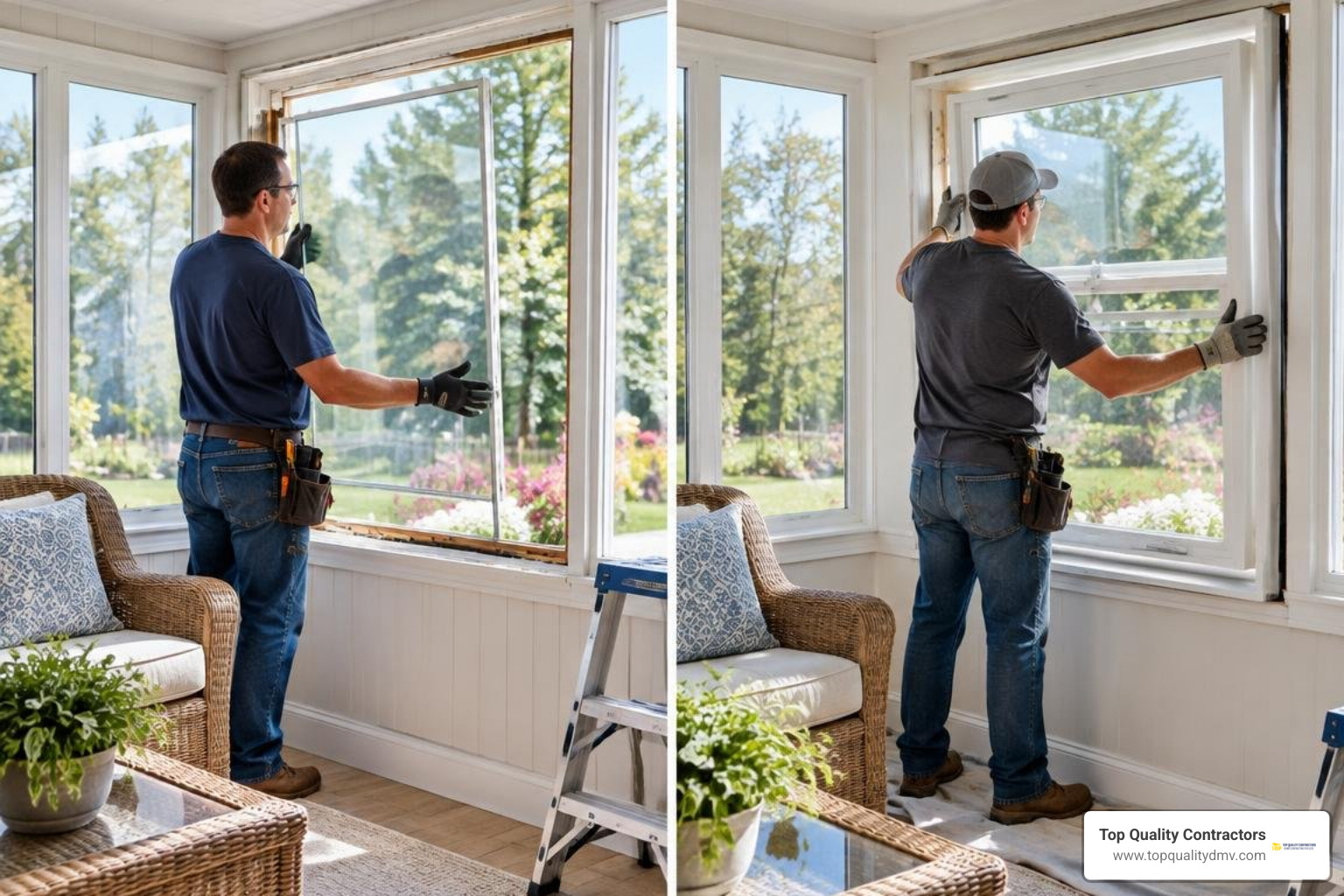
- Removal: Old glass units or full windows are carefully taken out.
- Fitting: Glass-only jobs set new units into the existing frames. Full-unit jobs install new frames, then glazing.
- Sealing and finishing: Gaskets, sealants, and trim are completed.
- Inspection and cleanup: Operation and weather-tightness are checked, and old glass is removed.
Glass-only work often takes a few days to a week once materials arrive, and it causes less disruption than rebuilding. Custom glass can add lead time.
Questions to Ask Before Hiring an Installer
- When can existing frames be reused, and what will you check?
- What are the glass ratings, and is safety glazing included?
- Who handles permits?
- Is the quote itemized?
- What do the installation and product warranties cover?
- Can you provide references and proof of insurance?
- How will you handle cleanup?
Frequently Asked Questions About Conservatory Window Replacement
Can I Replace the Glass and Keep the Existing Frames?
Yes, when the frames are in good condition. They should be sound and square, with intact drainage and seals, and the new glass must be compatible with the frame. A professional should measure precisely, especially for older or custom frames.
How Long Does Conservatory Window Replacement Take?
The survey usually comes first, followed by lead time for custom units. Fitting itself often takes a few days to a week, depending on project size and access. Large or hard-to-reach rooms take longer.
Do I Need to Replace Every Window at Once?
Not always. Failed units can be replaced alone, but replacing as a set often gives a more consistent finish and avoids repeat visits as other units fail. Budget and survey findings decide the plan, and a staged approach can work if the order is sensible.
Conclusion
The best choice depends on what failed. Misted glass in sound frames often needs only new glass, while draughts and damaged frames point to full units, and persistent temperature swings may point to the roof. Set clear comfort goals, then compare itemized local estimates side by side.
Top Quality Contractors installs energy-efficient windows and doors for Maryland homeowners, with free, transparent estimates and no hidden fees. Homeowners ready to move forward can start with the team’s Maryland window contractors page.