
How Maryland Property Owners Can Identify the Best Window Installers
How Maryland Homeowners Can Find the Best Window Installers
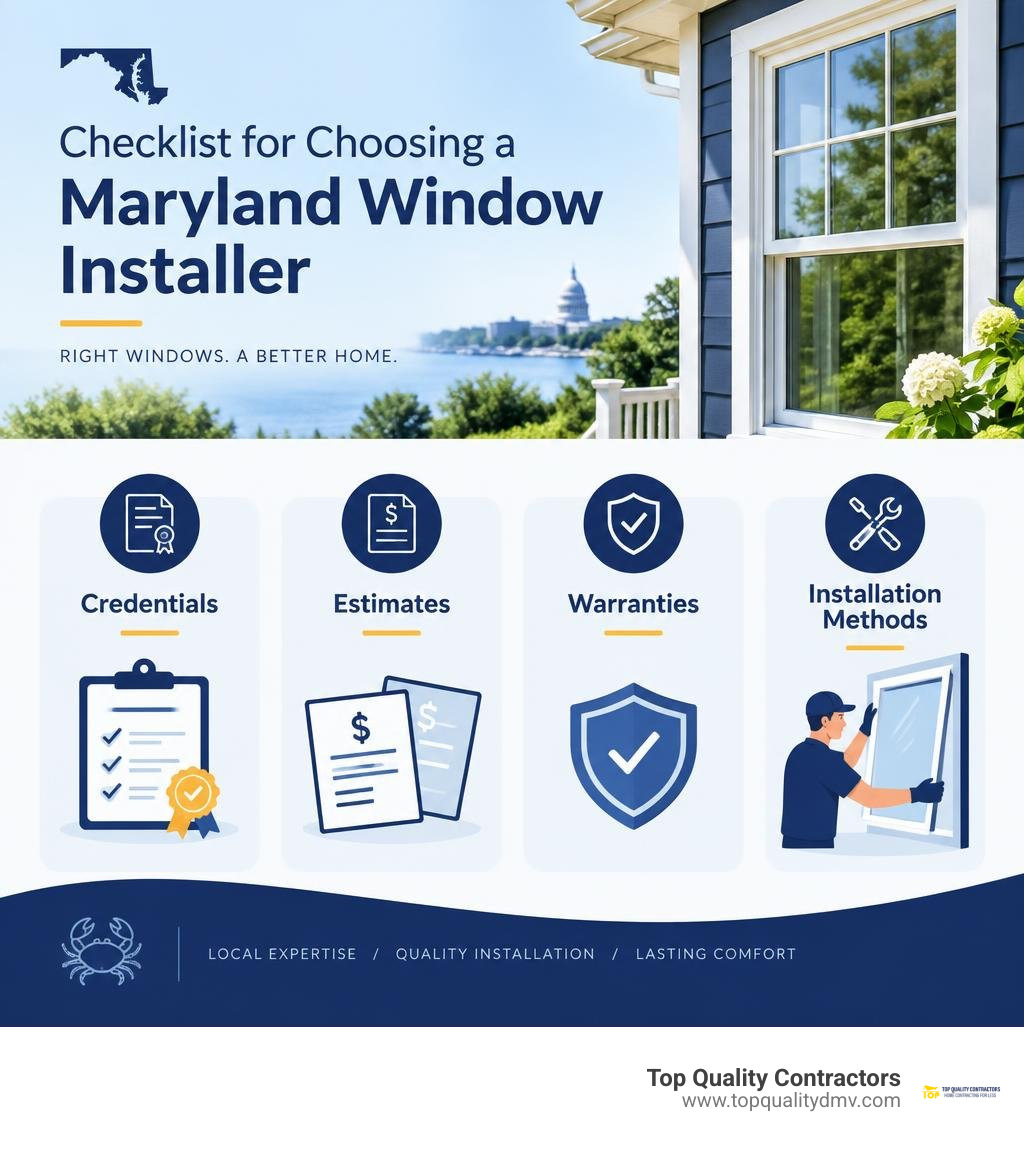
The best window installers in Maryland have a strong local track record, proper licensing and insurance, and clear written estimates. Homeowners should compare at least two bids, check what each warranty covers, and ask how the crew will seal and protect the window opening. For homes built before 1978, they should also confirm that the contractor follows lead-safe rules.
A careful installation helps new windows reduce drafts and resist water leaks. The right choice depends on both the window and the people installing it.
Best window installers terms to learn:
Key Qualities That Define the Best Window Installers in Maryland
Identifying a reputable contractor requires evaluating local experience, technical certifications, and verified customer feedback. The regional climate in Central Maryland—characterized by humid summers, frequent coastal storms, and freezing winter temperatures—demands fenestration systems that provide superior thermal insulation and structural resistance. Industry evaluations by resources such as Best Window Installation Companies – Forbes Home emphasize that precise physical installation is just as critical as product manufacturing standards for long-term envelope integrity.

Licensing, Insurance, and Lead-Safe Certifications
Every legitimate exterior contractor operating within Maryland must hold an active license issued by the Maryland Home Improvement Commission (MHIC). This credential confirms regulatory compliance, basic competency, and consumer protection fund backing.
Homeowners must verify three non-negotiable legal credentials before allowing work to begin:
- MHIC License: Confirms the business legally operates within the state and adheres to statutory building standards.
- Comprehensive General Liability and Workers’ Compensation: Protects the property owner against liability in the event of accidental property damage or job-site injuries.
- EPA Lead-Safe Certification: Mandatory for contractors disturbing painted surfaces in residential properties built prior to 1978, preventing hazardous lead dust dispersion.
Workmanship Warranties and Product Guarantees
A complete warranty structure features two distinct layers: the manufacturer product warranty and the contractor workmanship warranty. While top-tier glass and frame manufacturers commonly provide 20-year to lifetime limited warranties against material defects, these protections routinely exclude failures caused by improper installation.
Professional installers provide dedicated labor guarantees covering perimeter seal failures, water intrusion, and structural alignment issues. Homeowners should always prioritize transferable warranties, which preserve property value during future real estate transactions.
How the Best Window Installers Protect Home Energy Efficiency
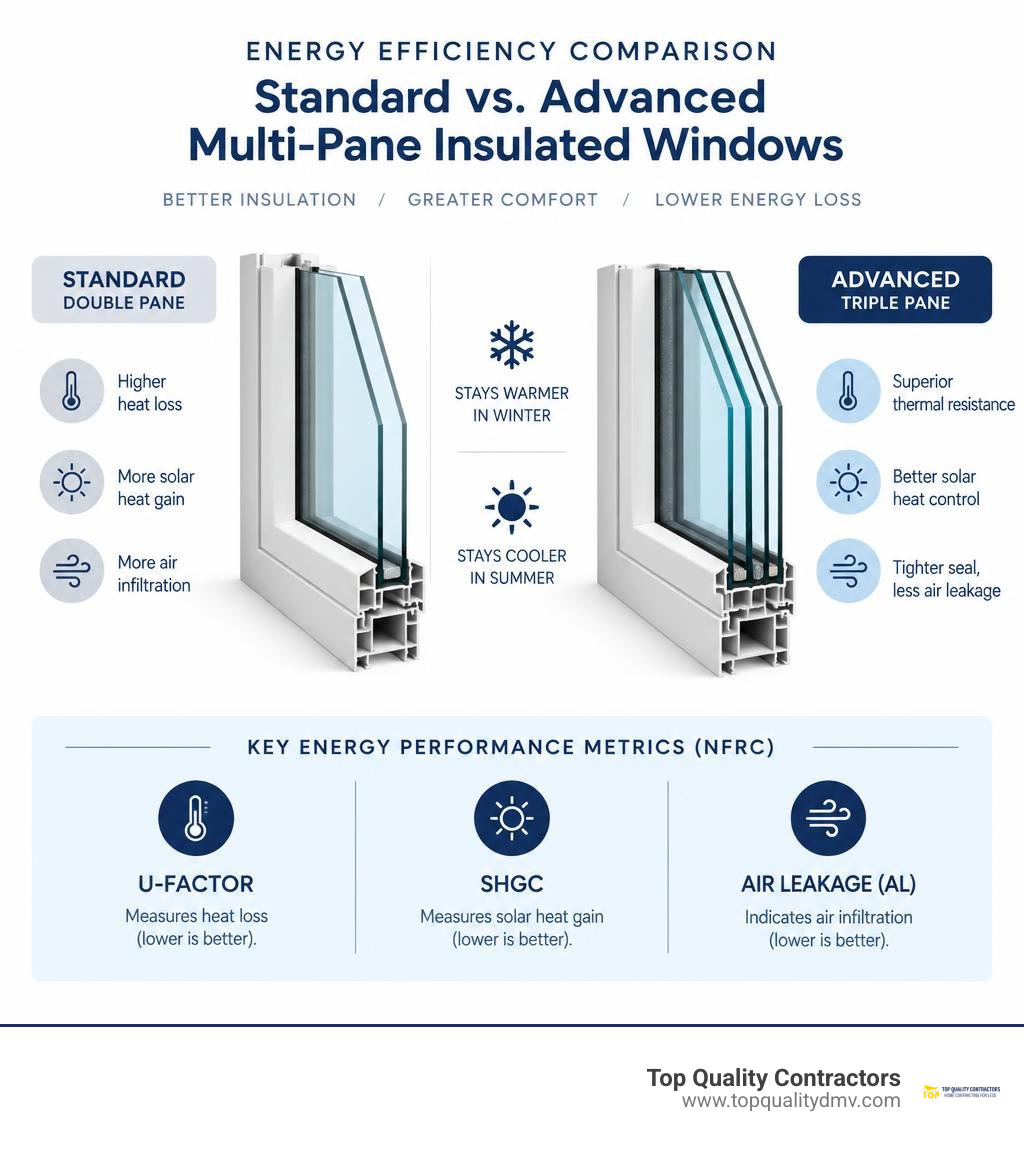
High-performance fenestration relies on advanced thermal components, including multi-pane glass units, low-emissivity (Low-E) microscopic coatings, and insulating argon or krypton gas fills. Proper integration of energy-efficient window systems requires meticulous rough-opening preparation, closed-cell expanding foam application, and robust exterior flashing.
Key energy performance metrics verified by the National Fenestration Rating Council (NFRC) include:
- U-Factor: Measures the rate of heat loss (lower values signify greater thermal resistance in winter).
- Solar Heat Gain Coefficient (SHGC): Measures how effectively the glazing blocks solar heat transmission during hot summer months.
- Air Leakage (AL): Indicates the rate of air infiltration through structural joints and weatherstripping.
Evaluating Window Materials, Styles, and Replacement Costs
Selecting appropriate replacement units requires balancing architectural integrity, maintenance expectations, and structural longevity. Different building designs across Montgomery County, Howard County, and Baltimore County necessitate tailored material solutions. Reviewing a detailed guide to compare window replacement options helps align individual project goals with architectural demands.
Frame Materials and Durability Ratings
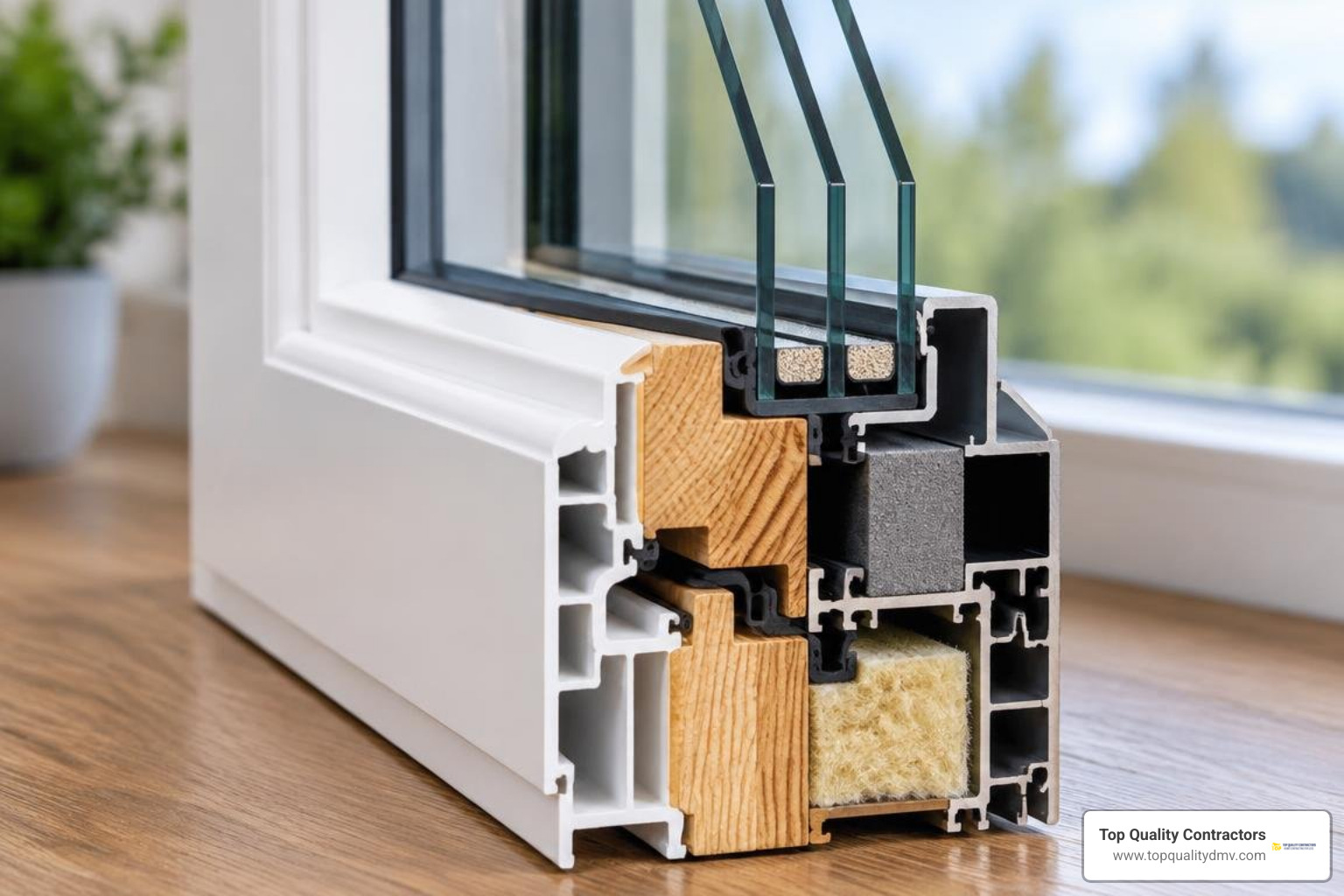
Frame engineering directly dictates thermal conductivity, dimensional stability, and maintenance requirements over decades of use:
| Material Type | Expected Lifespan | Maintenance Level | Thermal Performance | Notable Strengths |
|---|---|---|---|---|
| Vinyl | 20–40 Years | Minimal | High | Cost-effective, moisture resistant, welded corners |
| Fiberglass | 30–50 Years | Minimal | Superior | High tensile strength, minimal thermal expansion |
| Composite | 25–40 Years | Low | High | Blends wood aesthetic with synthetic durability |
| Wood / Clad | 30+ Years | Moderate to High | High | Authentic historic appearance, premium insulation |
Architectural Styles and Custom Window Replacement
Residential architecture across Maryland incorporates a variety of functional window styles. Standard double-hung windows remain the regional standard due to their versatile ventilation and tilt-in sashes for effortless maintenance. Projecting casement and awning units utilize compression seals that deliver outstanding air tightness against prevailing exterior winds.
For complex elevations, integrating custom arch window replacements preserves architectural character while upgrading thermal performance. Homeowners can browse different residential window styles to determine the ideal aesthetic configuration for their facade.
Cost Breakdown: Investment vs. Long-Term Energy ROI
Energy Star certified models reduce household energy bills by an average of 12 to 13 percent when replacing outdated, single-pane units. Beyond monthly utility reductions, high-efficiency upgrades yield immediate equity: national industry analyses indicate that residential vinyl window replacements recoup roughly 67 percent of their total project cost upon home resale. Coordinating window upgrades alongside broader comprehensive window and door solutions ensures a weather-tight building envelope and maximizes long-term return on capital.
The Window Replacement Process: Preparation, Timing, and Installation
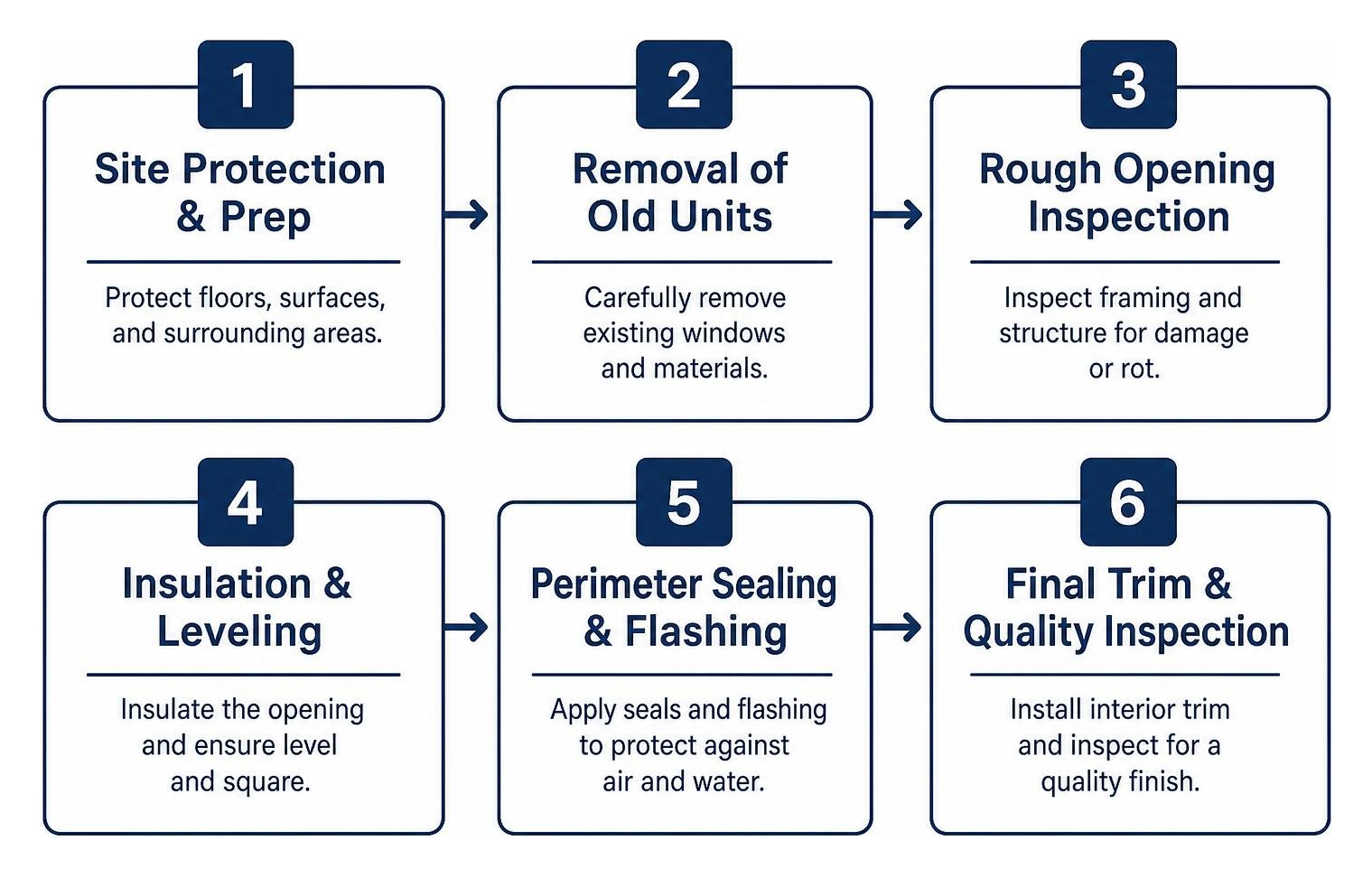
The execution of a window replacement project requires clear coordination between the homeowner and the installation crew to ensure clean, efficient site management.
How to Prepare Your Home for Installation Day
Homeowners can accelerate workflow and safeguard interior belongings by following a structured preparation routine:
- Clear Interior Pathways: Remove furniture, area rugs, and decorative items within five to six feet of all window openings.
- Remove Window Treatments: Take down all blinds, curtains, shades, and mounting hardware prior to crew arrival.
- Deactivate Security Sensors: Temporarily disarm hardwired or wireless window alarm sensors.
- Isolate Dust Zones: Technicians utilize drop cloths and HEPA-filtered extraction vacuums, but covering adjacent electronics and furniture provides added protection.
- Secure Household Pets: Restrict pets to quiet interior rooms away from active work zones.
Installation Timelines and Weather Considerations
Standard full-home retrofits generally proceed at a pace of roughly 10 to 15 window units per working day for an experienced crew. While moderate spring and autumn temperatures provide ideal working conditions, professional crews execute installations year-round across Central Maryland.
During winter installations, certified teams work sequentially—removing and installing one unit at a time—to prevent indoor temperature drops. Projects are promptly rescheduled if active rainfall or severe weather poses moisture-intrusion risks to exposed wall framing.
Professional Installation vs. DIY Risks
While self-installation may appear economical, minor measurement inaccuracies or flashing mistakes can lead to severe structural rot, hidden mold development, and compromised interior drywall. Improper fastener placement or frame racking frequently voids manufacturer warranties. Entrusting the project to certified professionals ensures airtight perimeter sealing and preserves the performance guarantees associated with investing in new quality windows.
Practical Steps to Select Your Contractor
Finding dependable local contractors involves systematic vetting through reputable consumer platforms and verified local directories. Homeowners should review regional feedback in Columbia, Ellicott City, and Silver Spring, and confirm that any prospective company holds the required Maryland credentials before requesting a detailed proposal.
Questions to Ask the Best Window Installers Before Signing a Contract
Before signing a home improvement contract, homeowners should pose the following direct questions to every prospective contractor:
- Are your installation crews direct employees or subcontractors, and what factory certifications do they hold?
- Do your project estimates provide a transparent breakdown of labor, materials, permit fees, and disposal costs?
- What specific flashing and expanding foam insulation methods are used to prevent moisture penetration?
- How does your business handle unexpected dry rot or framing damage discovered after removing existing sashes?
- What specific workmanship warranty do you provide independently of the manufacturer’s parts warranty?
Comparing Bids and Reducing Out-of-Pocket Expenses
When evaluating competing proposals, verify that all bids account for identical scope items, including glass packages, frame construction, exterior trim wrapping (capping), and cleanup protocols. Homeowners can optimize project value by replacing windows in whole-house phases to achieve volume efficiency, scheduling installations during non-peak seasons, and applying available federal Energy Star tax credits.
Frequently Asked Questions About Window Replacement
Which window style is the most expensive to replace?
Bay and bow configurations carry the highest replacement costs due to their structural complexity. These projecting architectural assemblies require custom multi-angle framing, reinforced head and seat boards, exterior support cables or brackets, and extensive roofing integration to prevent water accumulation.
How long do modern replacement windows typically last?
High-quality replacement windows engineered from modern vinyl, composite, or fiberglass materials generally deliver a functional lifespan ranging between 20 and 40 years. Achieving maximum durability depends heavily on proper installation, regional weather exposure, and routine cleaning of operational weep holes and hardware.
When is the best time of year to replace residential windows in Maryland?
Late spring and early autumn present optimal weather conditions for residential window retrofits due to moderate outdoor temperatures and lower seasonal precipitation. However, certified installation teams operate effectively across all seasons by using specialized single-opening replacement protocols that prevent home heat loss during colder winter retrofits.
Conclusion
Securing the long-term energy performance, comfort, and value of a home requires selecting an experienced, fully licensed contractor committed to precision workmanship. Maryland property owners across Columbia, Silver Spring, Germantown, Gaithersburg, Glen Burnie, and surrounding counties can protect their home exterior investments by choosing proven specialists who provide transparent estimates and uncompromising quality standards.
When you are ready to upgrade your home’s thermal efficiency and curb appeal with reliable installations, schedule a consultation with the leading Window Contractors in Maryland at Top Quality Contractors for a free, transparent estimate backed by guaranteed workmanship.