
Real-World Double Hung Window Pricing Breakdown for Homeowners
Comprehensive Breakdown of Double Hung Window Prices
Average double hung window prices typically range from $300 to $1,950 per window installed, depending on frame material, unit dimensions, and glazing options. Standard vinyl replacements generally cost between $300 and $850 per window, while higher-end materials such as fiberglass, wood, and clad-wood range from $600 to $1,950 installed.
Evaluating residential replacement options requires an understanding of how component costs integrate into a total project investment. According to a 2025 survey of 1,000 homeowners, double-hung units accounted for 41% of recent residential replacements, remaining the industry benchmark for standard architectural performance.
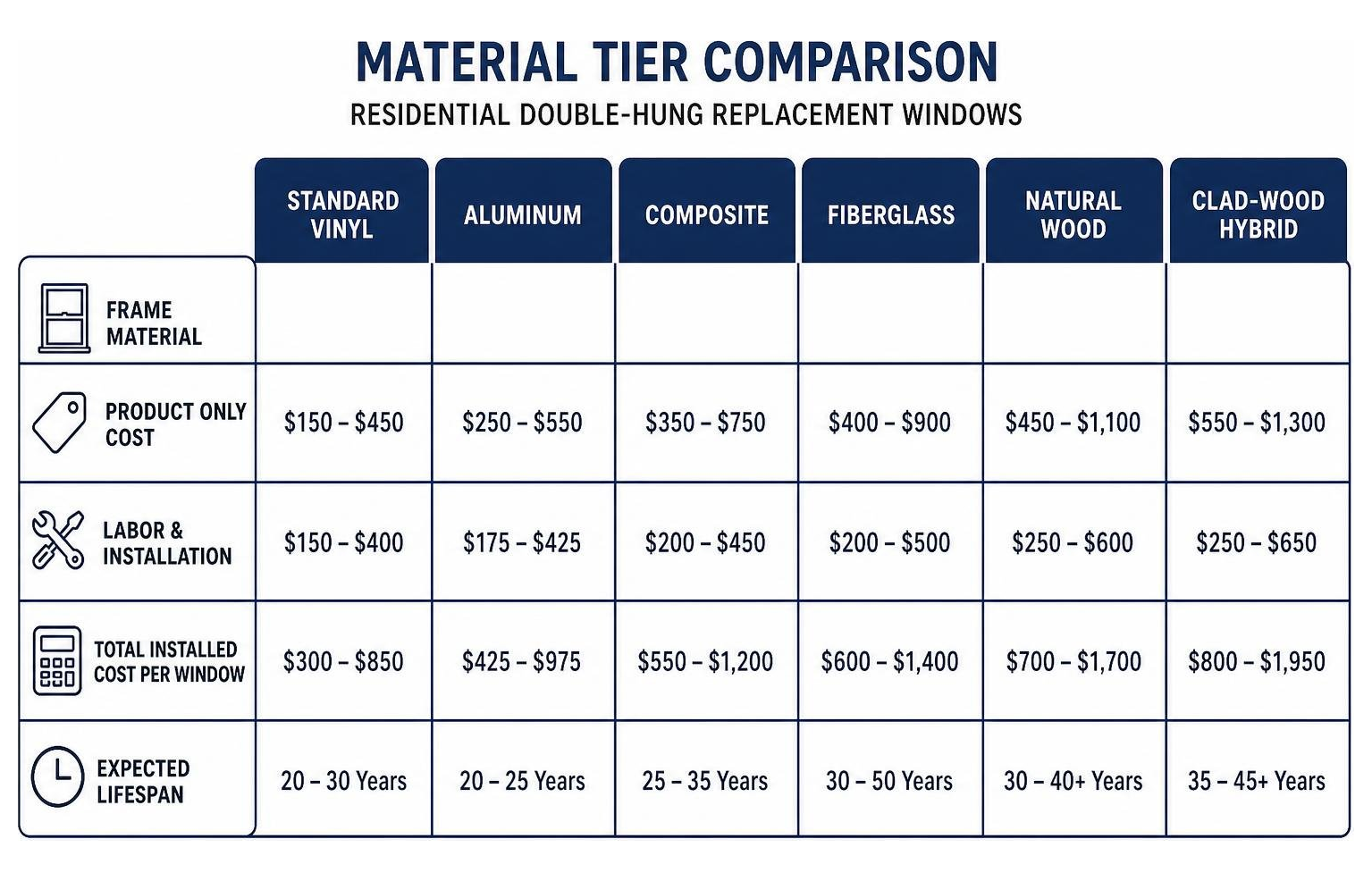
When analyzing current market estimates, the overall cost structure separates into product procurement and professional craftsmanship. Consulting industry cost benchmarks across frame materials highlights how choices in core construction dictate the bottom line. Below is a detailed cost comparison reflecting typical pricing across primary material categories:
| Frame Material | Product Only Cost | Labor & Installation | Total Installed Cost per Window | Expected Lifespan |
|---|---|---|---|---|
| Standard Vinyl | $150 – $450 | $150 – $400 | $300 – $850 | 20 – 30 Years |
| Aluminum | $250 – $550 | $175 – $425 | $425 – $975 | 20 – 25 Years |
| Composite | $350 – $750 | $200 – $450 | $550 – $1,200 | 25 – 35 Years |
| Fiberglass | $400 – $900 | $200 – $500 | $600 – $1,400 | 30 – 50 Years |
| Natural Wood | $450 – $1,100 | $250 – $600 | $700 – $1,700 | 30 – 40+ Years |
| Clad-Wood Hybrid | $550 – $1,300 | $250 – $650 | $800 – $1,950 | 35 – 45+ Years |
Homeowners evaluating different window styles must account for these material tiers to make sound, long-term financial choices for their properties.
Analyzing Average Double Hung Window Prices by Material
The construction material selected for a window sash and mainframe directly influences thermal conductivity, structural rigidity, and aesthetic versatility.
- Vinyl: Extruded polyvinyl chloride (PVC) is the most widely adopted material due to its optimal balance of thermal insulation and affordability. Quality vinyl compounds feature multi-chambered internal profiles filled with insulating air or foam, resisting moisture, peeling, and rot without requiring repainting.
- Fiberglass: Composed of glass fibers saturated with thermoset resin, pultruded fiberglass mimics the expansion and contraction rates of the insulated glass unit itself. This thermal compatibility preserves perimeter seals under wide temperature swings, making fiberglass an exceptionally durable solution.
- Natural Wood & Clad-Wood: Offering classic historical appeal, solid wood interiors provide natural insulating properties but demand periodic staining or painting. Clad-wood variants encase the exterior frame in extruded aluminum or vinyl, preserving traditional aesthetics indoors while mitigating weather degradation on the outside.
- Composite: Manufactured using polymeric blends, recycled wood fibers, or thermoplastic resins, composites provide elevated tensile strength and rot resistance, positioned in performance between vinyl and fiberglass.
Deciding to invest in top quality doors & windows ensures these material selections withstand regional weather patterns while maintaining airtight interior environments.
How Unit Dimensions Shape Double Hung Window Prices
Sizing serves as another primary cost driver in window manufacturing. Standard residential rough openings benefit from streamlined, high-volume production lines, whereas custom-milled dimensions carry manufacturing premiums.
The most prevalent standard size for residential double-hung windows is 32″ x 54″, with total installed costs typically spanning $350 to $700 in vinyl. Similarly, a 30″ x 48″ unit offers an accessible pricing entry point. Conversely, non-standard dimensions—such as structural retrofits spanning 36″ x 60″ or larger custom proportions—frequently add 20% to 40% to base material costs.
When replacing aging units with new quality windows, working within standard modular sizes avoids custom fabrication surcharges and prevents extended factory lead times.
Single-Hung vs. Double-Hung Replacement Costs
Homeowners comparing architectural options often evaluate single-hung versus double-hung mechanisms. While structurally similar from the curb, mechanical differences affect ventilation capability, interior maintenance, and total installed expenditure.
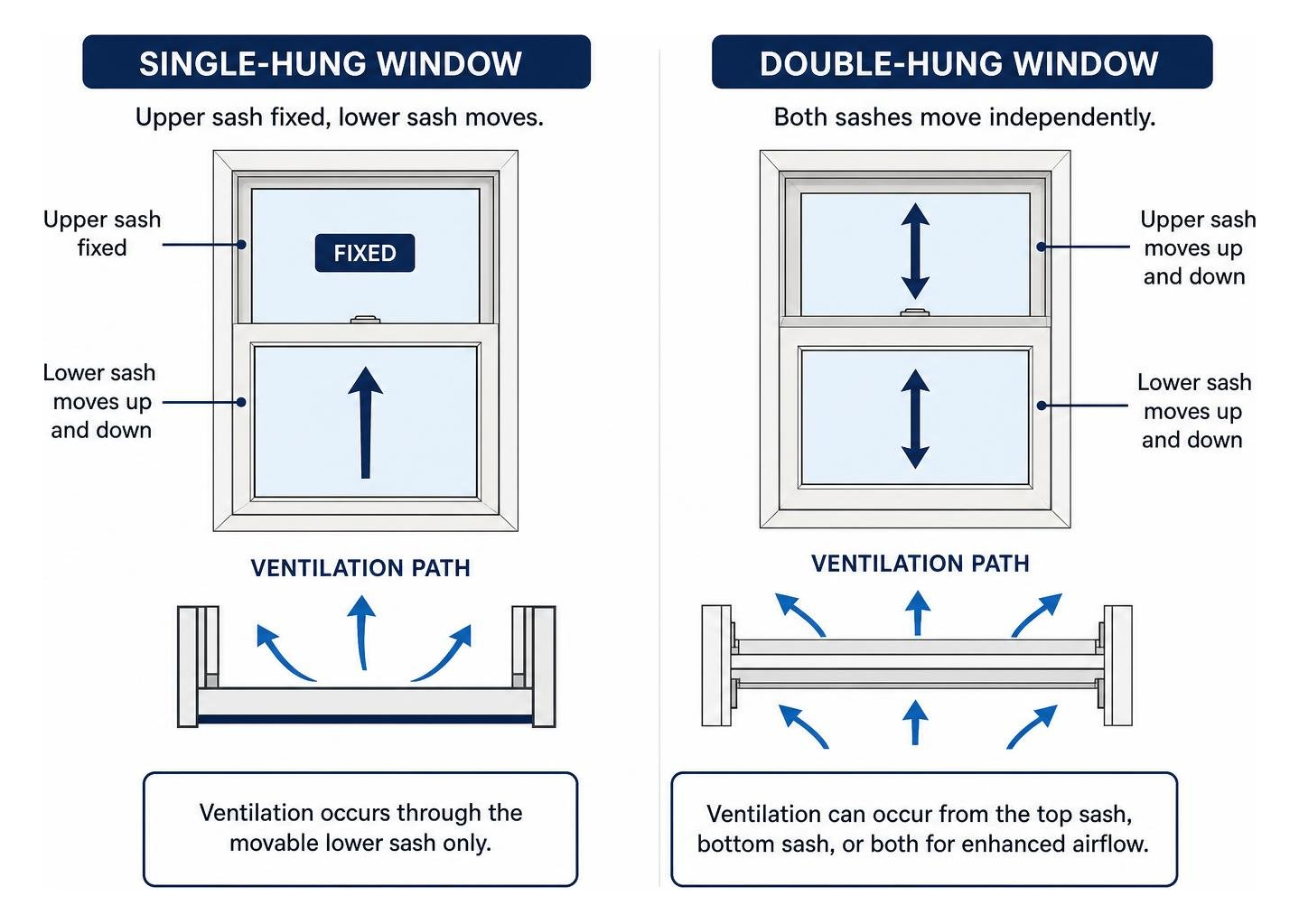
A single-hung window features a fixed upper sash with a mobile lower sash that slides vertically. In contrast, a double-hung window incorporates two independently operating sashes that move upward and downward within the jamb tracks.
Reviewing cost comparisons between single and double hung units reveals that single-hung units generally cost between $200 and $900 installed, whereas double-hung configurations range from $250 to $1,000 for equivalent dimensions and finishes.
The $50 to $150 per-unit premium for double-hung windows offers distinct functional advantages:
- Convective Air Circulation: Lowering the top sash while raising the bottom sash allows warm air to escape through the upper opening while drawing cooler air in through the lower opening.
- Tilt-In Cleaning: Both sashes pivot inward into the living space, eliminating the safety hazard of using ladders to clean exterior glass on upper levels.
Glazing Technologies, Energy Performance, and Long-Term Savings
A window frame constitutes only 10% to 15% of the total unit surface area; the insulated glass unit (IGU) accounts for the remainder. Modern glazing technology plays a significant role in managing residential heating and cooling expenses.
Nearly 79% of homeowners select double-pane glazing for replacement projects. Upgrading standard clear glass to an insulated package includes several key components:
- Low-E (Low-Emissivity) Coatings: Microscopic metallic oxide layers applied to glass panes reflect radiant infrared heat. During winter, interior thermal energy is reflected back indoors; during summer, external solar heat is deflected outside.
- Inert Gas Fills: Argon and krypton gases possess higher density than standard atmospheric air. Injected between sealed panes, these non-toxic gases reduce conductive and convective heat transfer through the IGU.
- Triple-Pane Configurations: Incorporating three panes of glass separated by two gas chambers creates a robust thermal barrier, lowering the overall U-factor and enhancing sound dampening.
Examining double glazed window prices shows that dual-pane configurations average $234 to $1,224 per window depending on coatings and spacing. For comprehensive details on multi-pane options, review this dual-pane insulating glass cost guide.
Heat gain and loss through inefficient fenestration accounts for 25% to 30% of residential HVAC energy use. Choosing units that meet stringent Energy Star rating standards helps lower annual utility costs by up to 12%. Investing in advanced energy efficiency delivers reliable thermal comfort and helps offset initial purchase costs over the lifespan of the unit.
Installation Labor, Regional Variables, and DIY Considerations
Professional installation accounts for roughly 40% to 70% of the total installed cost of a window project, with standard technician hourly rates ranging from $60 to $120. Total labor costs fluctuate depending on installation method and structural conditions:
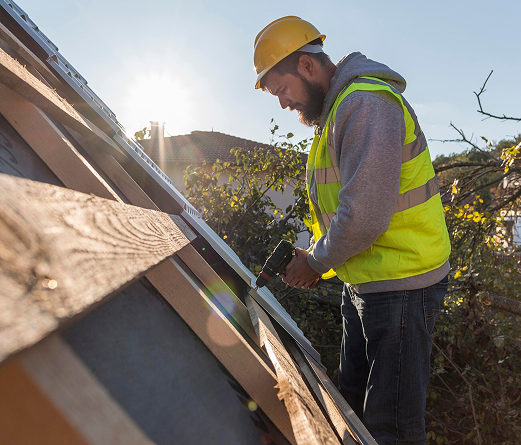
- Retrofit (Pocket) Installation: Installers place the new double-hung unit into the existing structural frame, preserving interior and exterior trim. This approach keeps labor costs between $100 and $250 per opening.
- Full-Frame Replacement: If the existing frame, sill, or rough framing shows signs of rot or water damage, the entire assembly must be removed down to the studs. This process involves installing new flashing, trim, and weatherproofing, resulting in labor costs between $250 and $600 per window.
A sound long-term window investment relies on precise installation. While DIY installation may seem like a way to save on labor, it carries substantial risk:
- Thermal Bridging and Air Infiltration: Improper leveling or poor insulation around the perimeter voids the energy performance of high-efficiency glass.
- Water Intrusion: Inadequate flashing integration leads to concealed moisture damage within wall cavities, structural framing, and finished drywall.
- Warranty Invalidation: Most window manufacturers void structural and glass seal warranties if the product is not installed according to strict architectural guidelines.
Choosing professionally installed windows & doors ensures reliable air sealing, proper square alignment, and lasting protection against water damage.
Frequently Asked Questions About Double-Hung Windows
How long do double-hung replacement windows typically last?
Quality vinyl double-hung units provide an operational lifespan of 20 to 30 years, while fiberglass assemblies can last 30 to 50 years. Solid wood units can perform for 30 to 40+ years when painted or stained regularly. Reviewing tips for handling a broken window in your home provides helpful strategies for identifying seal failures or frame issues before structural damage spreads.
Can you replace just one window sash instead of the entire frame?
Yes. If the existing mainframe, sill, and interior jambs are square and free of rot, homeowners can install a sash replacement kit. These kits cost between $100 and $400 per sash and include replacement glass, upper and lower sashes, and new balance tracks, offering an economical way to fix broken components without removing the entire frame.
Are double-hung units significantly less energy efficient than casement styles?
Casement windows utilize a crank mechanism that presses the sash tight against the frame to create an airtight compression seal. Double-hung windows rely on weatherstripping along the vertical jamb tracks and meeting rails. However, modern energy efficient windows with dual interlocks, triple-fin weatherstripping, and multi-chambered vinyl profiles deliver low air infiltration rates that comfortably meet or exceed rigorous performance standards.
Conclusion
Upgrading your home’s windows requires balancing upfront costs, long-term durability, and energy efficiency. From standard vinyl designs to premium fiberglass, understanding the key factors behind double hung window prices helps you make informed choices that fit your property and budget.
Top Quality Contractors provides professional window installation services across Maryland, including Columbia, Germantown, Silver Spring, Ellicott City, Glen Burnie, Gaithersburg, and throughout Montgomery, Prince George’s, Baltimore, and Howard Counties. With transparent, itemized estimates and no hidden fees, our experienced team ensures your project is completed with exceptional workmanship and dependable, long-term performance.
Ready to improve your home’s comfort and energy savings? Contact the premier window contractors in Maryland today to schedule your free, comprehensive estimate.