
The Ultimate Guide to Compare Window Replacement Options
Compare Window Replacement Options Before You Buy
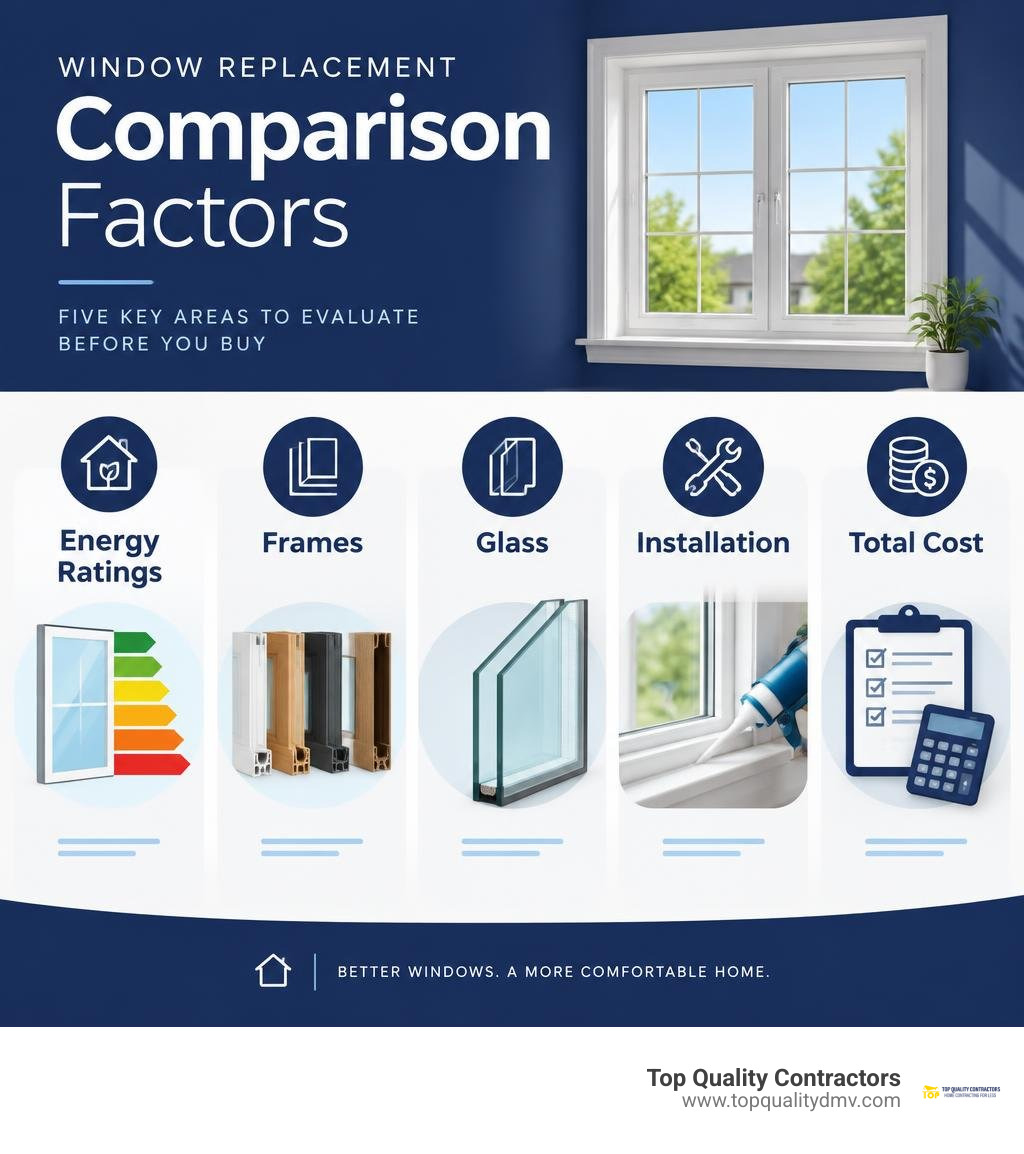
Window replacement is worth considering when windows are drafty, hard to open, visibly damaged, or have fogged glass between panes. To compare options confidently, focus on four essentials:
- Energy performance: Look for insulated glass, Low-E coatings, and NFRC performance ratings.
- Frame material: Compare vinyl, wood, fiberglass, and composite frames for cost, upkeep, and durability.
- Installation quality: Precise measurements, flashing, and sealing are as important as the window itself.
- Full project cost: Request a written estimate that separates window, labor, trim, repairs, warranty, and financing terms.
For Maryland homeowners, the right windows can make rooms more comfortable through humid summers and cold winters. Modern multi-pane glass and tight seals help limit heat transfer, reduce outside noise, and support steadier indoor temperatures. They can also refresh curb appeal and address costly problems such as drafts, moisture damage, and failing seals.
This guide explains how to weigh materials, styles, glass packages, energy labels, contractor qualifications, and installation details without overlooking the costs that may appear after work begins. For broader context on how replacement units fit into home improvement, see the window replacement overview.
Window replacement terms simplified:
Key Signs It Is Time for Window Replacement
Recognizing when residential windows have reached the end of their functional lifespan prevents structural water damage and unchecked energy loss. A primary indicator is tactile draft detection. When standing near a closed window during a gusty day in Columbia or Silver Spring, noticeable air currents signal that the perimeter weatherstripping, sash balance, or frame seals have degraded.
Another unmistakable symptom is condensation or persistent fogging trapped between the glass panes. In insulated glass units (IGUs), this haze proves that the perimeter seal has failed, allowing the insulating gas to escape and ambient moisture to penetrate the interior chamber. Once a seal fails, the thermal efficiency of the glass drops dramatically.
Operational friction also indicates structural changes within the building envelope. Sashes that stick, refuse to slide smoothly, or fail to stay open without a prop often suffer from warped frames or failed counterbalance systems. Physical deterioration, such as soft, decaying exterior wood sills, peeling paint, or cracked framing materials, exposes structural framing to wood rot and insect intrusion.
Safety hazards also demand swift attention. When addressing damaged glass or cracked panes, review proper techniques for handling broken glass safely before deciding on unit replacement.
Furthermore, escalating heating and cooling expenses frequently point to window failure. When aging assemblies allow conditioned air to escape, HVAC equipment runs continuously to maintain setpoint temperatures. Upgrading deteriorated units contributes significantly to improving overall home insulation and long-term envelope stability.
Comparing Window Frame Materials, Styles, and Glass Technologies
Selecting the right replacement windows requires balancing architectural authenticity, ongoing maintenance demands, and structural performance. Modern residential units are engineered from several primary frame materials, each offering distinct thermal and aesthetic properties.
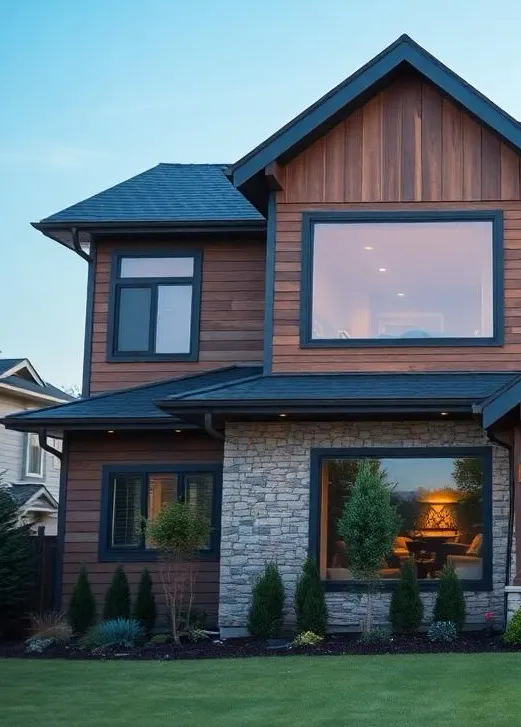
- Vinyl Framing: Premium extruded vinyl represents the most popular choice for Maryland residences due to its moisture resistance, affordability, and minimal upkeep requirements. High-grade vinyl frames incorporate internal multi-chamber construction that traps air to deliver superior insulation. They never require painting, scraping, or staining, and they resist rot, warping, and insect damage even during humid summer stretches.
- Wood Framing: Traditional wood windows provide timeless warmth and historical authenticity, particularly suited for classic architectural styles found across Montgomery County and Howard County. However, exterior wood surfaces require ongoing staining or painting to prevent rot and moisture absorption.
- Fiberglass and Composite Materials: Fiberglass delivers high tensile strength and minimal thermal expansion rates, matching the expansion properties of the glass panes themselves. Composite frames blend the aesthetic appeal of wood fibers with the weather resistance of polymers for structural longevity.
Homeowners can explore an array of configurations when exploring architectural window styles:
- Double-Hung Units: Featuring two vertically operating sashes, double-hung windows facilitate dual-zone ventilation (cool air enters the bottom while warm air escapes the top) and feature tilt-in sashes for effortless interior cleaning.
- Casement Mechanisms: Hinged at the side and operated by an interior crank, casement windows swing outward to catch breezes and provide tight weather protection, as exterior wind presses the sash directly against the weatherstrip seals.
- Awning and Picture Windows: Awning units hinge at the top for rain-deflecting airflow, while stationary picture windows maximize natural daylight and panoramic outdoor views without air leakage risks.
When choosing energy-efficient windows, the glass package remains the most critical component. High-performance assemblies feature double or triple glazing separated by warm-edge spacer systems. The internal cavities are filled with inert, non-toxic gases—such as argon or krypton—which conduct significantly less heat than standard ambient air.
Microscopically thin Low-Emissivity (Low-E) metal oxide coatings are applied to glass surfaces to reflect long-wave infrared heat back to its source while permitting visible natural light to pass through.
| Frame Material | Thermal Insulation | Maintenance Requirement | Moisture Resistance | Durability Profile |
|---|---|---|---|---|
| Vinyl | High (Multi-Chambered) | Minimal (Soap & Water) | Exceptional | 20–30+ Years |
| Wood | High (Natural Insulator) | High (Periodic Painting) | Moderate (Requires Sealing) | 30+ Years (Maintained) |
| Fiberglass | Exceptional | Low (Occasional Cleaning) | Exceptional | 35–50 Years |
| Composite | High | Minimal to Low | High | 30–40 Years |
Thermal Performance and Energy Ratings
Evaluating window efficiency requires understanding standardized metric labels established by the National Fenestration Rating Council (NFRC). Rather than relying on marketing claims, homeowners should analyze four certified performance metrics:
- U-Factor: Measures the overall rate of non-solar heat transfer through the entire window assembly. U-factor values typically range from 0.20 to 1.20; the lower the number, the greater the window’s resistance to heat flow and the better its insulating capacity during freezing winters.
- Solar Heat Gain Coefficient (SHGC): Measures the fraction of incident solar radiation admitted through a window, expressed as a number between 0 and 1. Lower SHGC numbers block unwanted solar heat gain during hot summer months, keeping indoor living areas naturally cooler.
- Visible Transmittance (VT): Quantifies the amount of daylight transmitted through the glazing, balancing shading performance with daylighting goals.
- Air Leakage (AL): Indicates the volume of air infiltration around the frame and sash assemblies; lower ratings denote tighter draft prevention.
Carefully understanding Energy Star ratings helps identify products optimized for local regional climates. In Maryland, balanced U-factor and SHGC selections keep homes comfortable through humid summers and cold winters.
Multi-pane glass packages, acoustic interlayers, and tight weatherstripping also offer sound dampening benefits. Outside traffic noise, barking dogs, and neighborhood disturbances are attenuated by the varying thicknesses of glass panes, which break up sound wave frequencies.
Combined with structural thermal upgrades, modern glass technologies provide proven methods to keep your home cool without overburdening HVAC systems.
Long-Term Value of Window Replacement
Investing in residential window replacement enhances lifestyle comfort while serving as a strategic financial investment in home equity. High-performance replacement units update the architectural curb appeal of older residences, creating crisp sightlines that impress prospective buyers and elevate neighborhood appeal across Ellicott City, Gaithersburg, and surrounding communities.
According to real estate data, window replacement consistently ranks among the top exterior home improvement projects for return on investment (ROI). Beyond immediate resale value, maximizing your window investment provides structural protection against water infiltration, reducing the risk of mold formation inside exterior wall cavities.
Modern windows also deliver weather resistance. Certified assemblies tested to ASTM international standards resist wind loads up to 155 MPH and withstand flying storm debris. For homeowners seeking resilience against coastal nor’easters, severe thunderstorms, and heavy wind events, impact-tested framing packages provide durable home defense.
Window Cost Factors and Budget Planning
Estimating the financial scope of a window replacement project involves analyzing several variables that dictate total material and labor expenditures.
Primary cost drivers include:
- Frame Material Selection: Standard white vinyl frames represent the most cost-effective tier, while architectural wood, custom exterior colors, painted laminates, and structural fiberglass require higher initial capital.
- Glazing Specifications: Upgrading from basic dual-pane glass to triple-pane units with specialized low-conductive spacers and dual Low-E coatings adds to upfront material costs, though it delivers greater lifetime energy efficiency.
- Unit Sizing and Architectural Complexity: Standard retrofit dimensions that slide neatly into existing framing are more budget-friendly than custom architectural shapes, bay windows, bow configurations, or oversized openings that require structural header alterations.
- Installation Scope (Insert vs. Full-Frame): Pocket (insert) installations preserve existing interior trim and exterior casing, minimizing labor costs. Full-frame replacement involves stripping the opening down to the rough framing studs, replacing sashes, jambs, and trim, and installing new perimeter flashing, which requires more labor hours and materials.
- Existing Frame Condition: Unforeseen repairs, such as addressing hidden wood rot, structural settling, or repairing damaged wall sheathing around old windows, adjust initial estimates.
Reviewing a detailed double-hung window pricing guide provides clear visibility into unit-level investments. Many homeowners utilize flexible financing solutions—such as zero-down, low-interest installment loans—to distribute costs over convenient monthly payments.
Additionally, transparent contractors supply comprehensive written estimates detailing manufacturing warranties and installation workmanship guarantees.
The Installation Process from Consultation to Quality Walkthrough
Flawless installation is essential to guarantee that a window achieves its rated energy metrics and durability targets. Even the highest-rated NFRC window will leak air and water if installed out of square or sealed incorrectly.
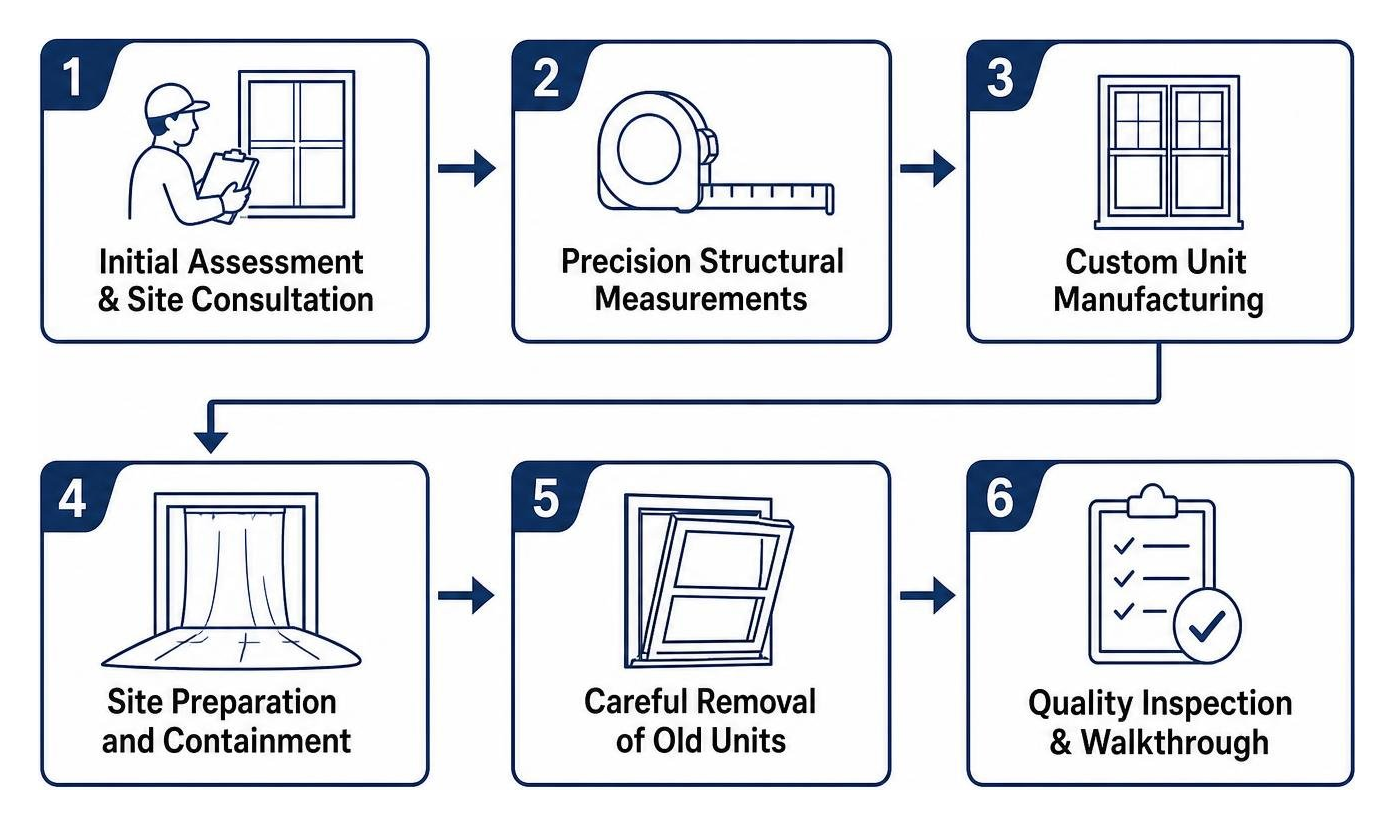
- Initial Assessment & Site Consultation: A factory-trained technician evaluates existing window performance, discusses architectural goals, and assesses structural framing conditions.
- Precision Structural Measurements: Exact width and height measurements are recorded down to the millimeter across multiple frame points to ensure custom-manufactured replacement units seat securely.
- Custom Unit Manufacturing: Windows are fabricated to exact architectural specifications, incorporating specified frame colors, glass coatings, internal grid patterns, and hardware selections.
- Site Preparation and Containment: Technicians lay protective drop cloths throughout the interior pathways, erect dust barriers, and prepare the exterior staging zone.
- Careful Removal of Old Units: The crew removes aging sashes, stops, and frames without damaging existing drywall, interior trim, or structural wall framing.
- Rough Opening Inspection & Preparation: Exposed rough openings are inspected for moisture damage, plumb, level, and square alignment. Sills are lined with flexible, waterproof flashing membranes.
- Window Insertion & Squaring: The new window assembly is set into place, shimmed at critical structural points, leveled, and fastened through the frame or mounting flanges in compliance with engineering requirements.
- Thermal Insulation & Perimeter Sealing: Low-expansion polyurethane insulating foam fills the gaps between the rough opening and window frame, blocking air leaks without bowing the jambs.
- Exterior Capping & Flashing: Custom-bent aluminum trim coil is capped over exterior wood trim, sealed with industrial-grade exterior sealants to create a weather-tight water barrier.
- Final Inspection and Walkthrough: Installers verify smooth sash operation, test locking mechanisms, clean the glass surfaces, remove project debris, and explain warranty terms to the homeowner.
Preparing Your Home for Window Replacement
Homeowners can take practical steps to streamline the installation timeline and protect their personal belongings:
Taking these precautions protects interior living spaces while enabling field technicians to work efficiently throughout the day.
Frequently Asked Questions About Window Replacement
How much can energy-efficient replacement windows reduce utility bills?
Installing ENERGY STAR certified replacement windows can reduce household heating and cooling costs by an average of 12% to 30%, depending on the age and condition of the units being replaced. Replacing old, single-pane windows with modern double-pane Low-E units significantly cuts down on thermal transfer. This reduces HVAC workload during humid summer months and cold winter periods, delivering reliable utility savings while upgrading household energy efficiency.
What certifications should homeowners look for when buying new windows?
Homeowners should look for four essential industry certifications:
- NFRC (National Fenestration Rating Council): Provides verified ratings for U-Factor, SHGC, Visible Transmittance, and Air Leakage.
- ENERGY STAR®: Validates that windows meet strict regional climate efficiency guidelines.
- FGIA (Fenestration and Glazing Industry Alliance): Certifies structural integrity, water penetration resistance, and overall manufacturing quality.
- ASTM International: Confirms storm-impact resilience and resistance against winds up to 155 MPH.
How long does the entire installation process typically take?
Custom window fabrication generally takes 3 to 8 weeks from the date final site measurements are recorded. Once manufactured units arrive from the factory, on-site installation proceeds quickly. A trained professional installation crew typically replaces 8 to 15 residential windows in a single working day, minimizing disruptions to the household routine.
Conclusion
Upgrading your home with modern replacement windows enhances everyday living comfort, dampens outside neighborhood noise, lowers seasonal utility bills, and provides long-term weather protection. Selecting high-performance frame materials, Low-E glass, and certified energy profiles transforms aging homes into resilient, energy-efficient spaces.
As a Maryland-based home-exterior contractor serving Columbia, Germantown, Silver Spring, Ellicott City, Glen Burnie, Gaithersburg, and communities across Montgomery, Howard, Prince George’s, and Baltimore counties, Top Quality Contractors delivers energy-efficient workmanship. The company provides homeowners with free, transparent estimates with no hidden fees, guaranteed solutions, and punctuality.
Connect with Top Quality Contractors through our Maryland window installation services page to schedule a professional consultation and begin your exterior upgrade today.