
What You Should Expect to Pay for Modern Double Glazed Glass
What Maryland Homeowners Should Expect to Pay for Double Glazed Windows
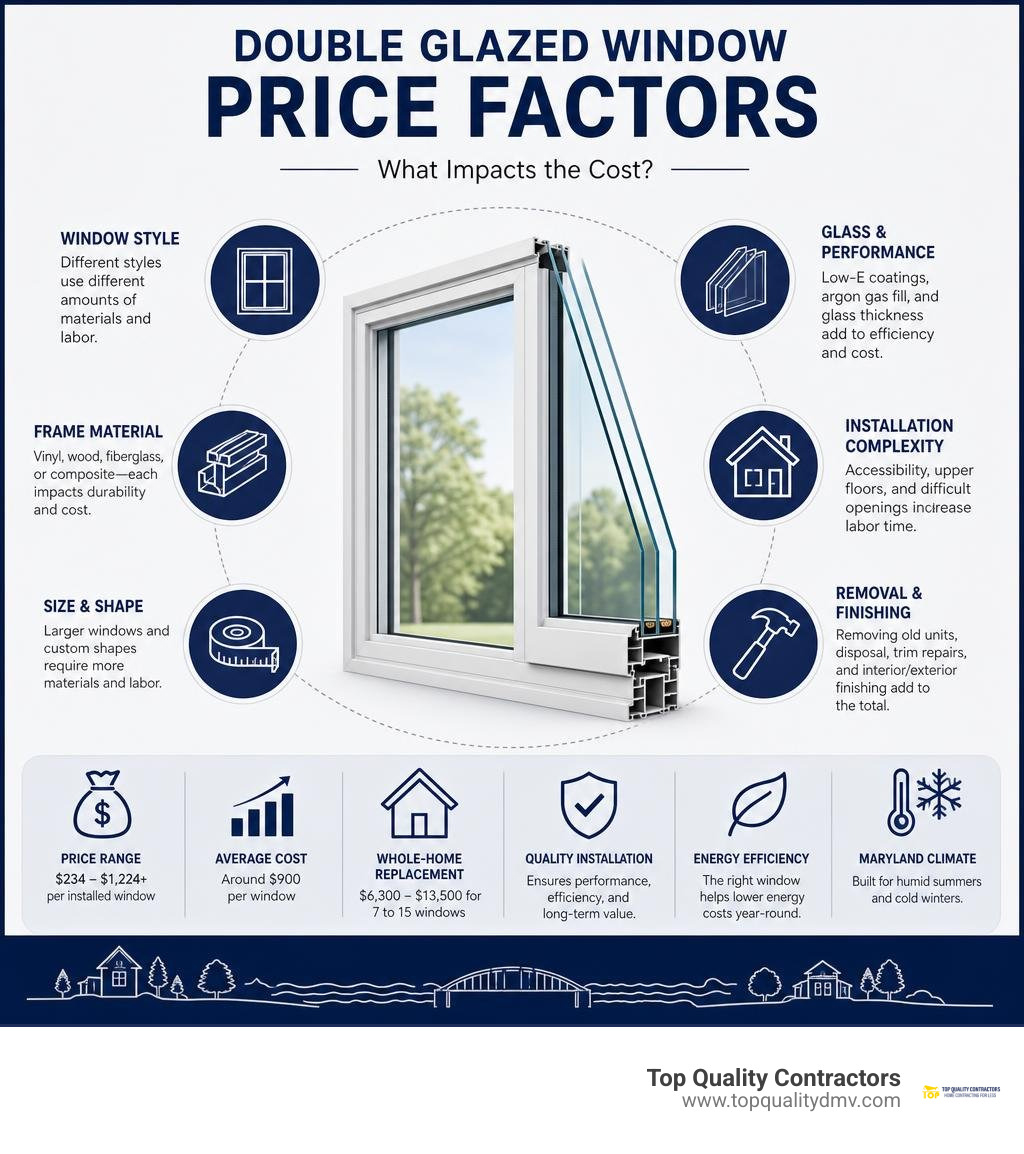
In 2026, double glazed window prices typically range from about $234 to $1,224 per installed window, with an average near $900. A basic standard-size vinyl double-hung unit may cost roughly $249 for the window alone, while larger openings, premium frames, custom shapes, and difficult installation can raise the total substantially.
For an early project budget, use these broad ranges:
- Standard vinyl double-pane replacement: $500 to $1,000+ per window installed
- Premium or custom windows: $1,000 to $1,224+ per window installed
- Whole-home replacement: often $6,300 to $13,500 for 7 to 15 windows, before unusually complex structural work
The final price is not just about the glass. Frame material, window style, Low-E coatings, argon fill, access to upper floors, removal of old units, trim repairs, and the quality of installation all matter. For Maryland homes, choosing an energy-efficient whole window – not just high-performing glass – is especially important for humid summers and cold winter weather.
Comprehensive Breakdown of Double Glazed Window Prices by Material and Style
A homeowner evaluating replacement fenestration must balance aesthetic aspirations with long-term structural durability. The core financial drivers of any window installation rest upon the synergy between frame construction and opening mechanics. Selecting the optimal configuration requires an analytical assessment of unit dimensions, glass thickness, hardware components, and required site labor.
| Frame Material | Average Installed Cost (Per Unit) | Expected Lifespan | Maintenance Level |
|---|---|---|---|
| uPVC / Vinyl | $500 – $1,000 | 20 – 30 Years | Low (Occasional cleaning) |
| Aluminium (Thermally Broken) | $800 – $1,400 | 40 – 50 Years | Low (Corrosion-resistant) |
| Timber / Hardwood | $1,200 – $2,500+ | 30 – 60+ Years | High (Periodic painting/staining) |
| Composite Framing | $1,000 – $1,800 | 35 – 45 Years | Low to Moderate |
Frame Materials: Vinyl, Aluminium, Timber, and Composites
The structural profile of a window unit directly controls its thermal conductivity, structural rigidity, and life-cycle cost. High-grade unplasticized polyvinyl chloride (uPVC or vinyl) serves as the most economical and thermally efficient base material for residential properties across Montgomery County and Baltimore County. These frames feature multi-chambered internal profiles that trap air pockets, preventing convective heat transfer without requiring extensive maintenance.
Aluminium profiles deliver modern architectural lines with slim sightlines, though they inherently cost approximately 25% more than vinyl alternatives. Because raw metal readily conducts heat, contemporary aluminium frames require polyamide thermal breaks to separate the interior and exterior structural profiles.
Homeowners who choose to invest top quality doors windows often evaluate natural wood. Timber frames provide timeless architectural character, but they demand a 50% pricing premium over vinyl and require consistent exterior sealing against regional humidity. Composite systems, blending cellulose fibers with thermoplastic polymers, bridge the gap by offering structural rigidity comparable to wood alongside the moisture resistance of engineered synthetics.
Window Styles: Casement, Sash, Tilt & Turn, and Bay Units
The mechanical complexity of a window style alters both manufacturing expense and site assembly fees. Basic fixed units lack operable sashes, making them the most budget-conscious configuration. When opening mechanisms are introduced, hardware requirements escalate the overall investment:
- Casement Windows: Operating on side-mounted hinges with rotating crank handles, these units pull tightly against exterior weatherstripping when closed. This compression seal minimizes air filtration, providing superior insulation in exposed locations.
- Double-Hung Sash Windows: Common throughout classic Maryland properties in Ellicott City and Silver Spring, sash units utilize counterbalanced weights or spiral springs to allow vertical movement of both sashes. Double-hung styles generally carry a 50% price premium over simple casements due to specialized balance tracks and meeting rails. Homeowners researching these styles can review local installation rates through window glass replacement cost benchmarks.
- Tilt and Turn Windows: Inspired by European engineering, dual-action hardware allows the sash to tilt inward at the top for secure ventilation or swing inward like an interior door. These specialized hinges cost roughly 25% more than standard side-hung units.
- Bay and Bow Assemblies: Multi-lite projections expand interior living area and harvest exterior daylight. Constructing a 3- to 5-lite bay projection involves custom structural load-bearing posts, custom head and seat boards, and integrated flashing, which often elevates total expenses by 100% to 150% compared to flat wall openings.
A homeowner can explore diverse profile configurations by examining specialized window styles designed to match distinct architectural demands.
Core Factors Influencing Total Double Glazing Installation Costs
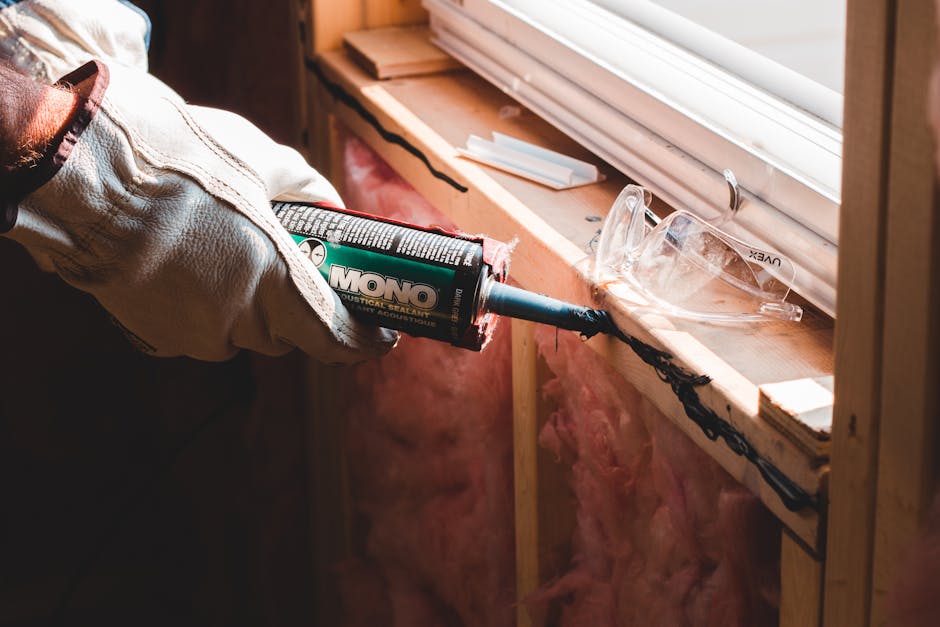
Estimating an accurate project scope requires evaluating the physical environment surrounding each opening. The structural integrity of the rough opening, ease of exterior access, and technician labor rates dictate real-world bids. Multi-story installations across properties in Germantown or Columbia MD frequently require scaffolding or mechanical lifts, adding $300 to $800 to total site overhead.
Furthermore, historical homes exhibiting structural settling or concealed rot in the rough opening sill require carpentry remediation before new units can be set level and square. Professional installations allocate 20% to 40% of the gross contract value toward skilled labor to guarantee plumb alignment, insulated shim gaps, and watertight flashing integration.
How Glass Upgrades and Low-E Coatings Impact Double Glazed Window Prices
An insulated glass unit (IGU) relies on technical enhancements to maximize interior climate control. Upgrading to microscopically thin Low-Emissivity (Low-E) metal oxide coatings adds approximately 10% to 15% to base unit costs. These metallic layers reflect long-wave infrared energy, retaining indoor furnace heat in sub-freezing Maryland winters while rejecting solar radiation throughout humid summer months.
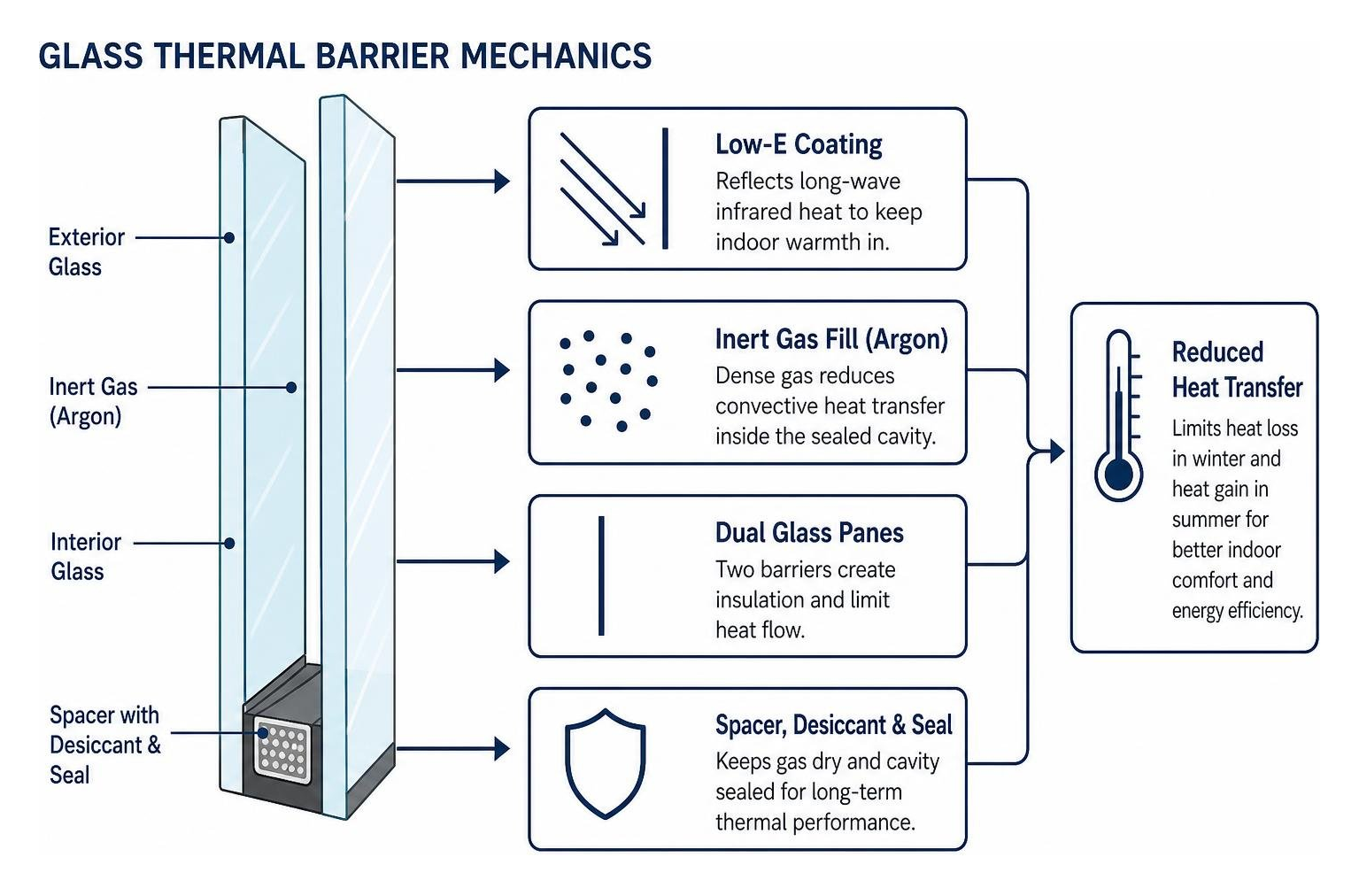
Displacing the ambient air inside the hermetically sealed glass cavity with dense inert gases further restricts convective energy movement. Dry argon gas represents the industry benchmark, providing a high thermal barrier without excessive expense. For properties adjacent to major highways or urban transit corridors in Prince George’s County, integrating acoustic laminated glass with polyvinyl butyral (PVB) interlayers dampens external decibel penetration, adding a 20% to 35% premium over standard clear glass.
Evaluating overall performance requires reviewing the certified Energy Star rating to verify proper solar heat gain coefficients (SHGC) and U-factors for the Mid-Atlantic climate zone. Homeowners can discover the operational value of advanced thermal designs by choosing energy efficient windows engineered for high performance.
Full Window Replacement vs. Glass-Only Sealed Unit Retrofitting
When double-pane units show condensation or internal hazing between the glass layers, the perimeter hermetic seal has failed, allowing moisture to saturate the internal desiccant matrix. Homeowners must determine whether to execute a localized glass repair or an entire perimeter frame overhaul.
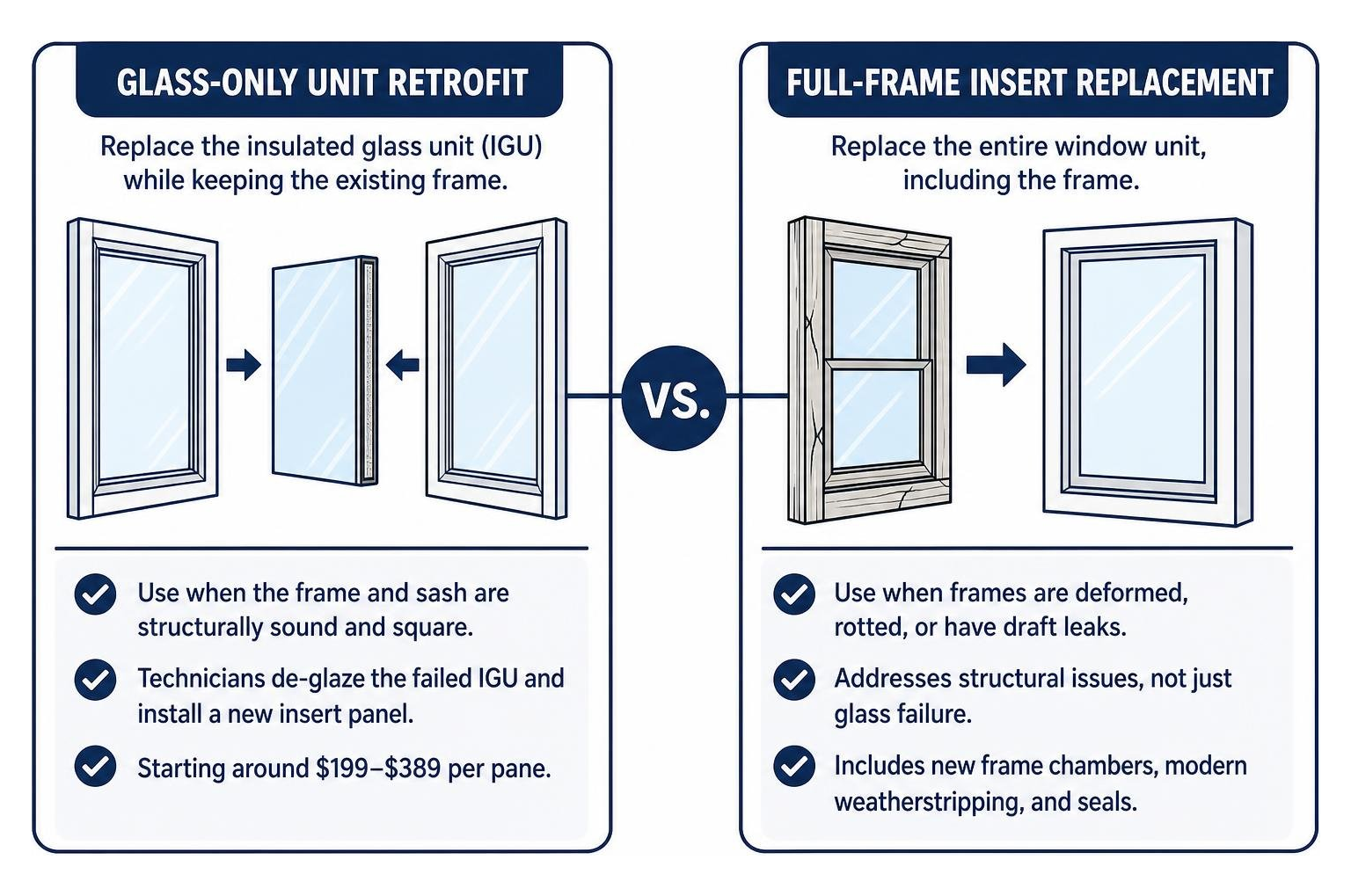
- Glass-Only Unit Retrofit: If the perimeter frame, sash tracks, and interior casing remain structurally square and free of decay, technicians can de-glaze the failed IGU and install an insert panel starting around $199 to $389 per pane.
- Full-Frame Insert Replacement: When existing wood or vinyl frames show mechanical deformation, corner separation, or perimeter draft intrusion, simply inserting fresh glass leaves structural air leaks unresolved. A complete replacement unit ensures new frame chambers, modern dual-fin weatherstripping, and insulated perimeter cavity seals.
Homeowners can review options within the dedicated category/windows resource center to evaluate specific hardware configurations.
Project Budgeting and Value Optimization Across Property Sizes

Whole-house window upgrades represent a lasting capital improvement that enhances everyday interior comfort. Project costs scale alongside square footage, architectural complexity, and total aperture count. Window contractors can optimize supply chain logistics and installation scheduling when a homeowner upgrades all openings at once, lowering per-unit staging, transport, and permit fees.
Whole-Home Double Glazed Window Prices for Different Property Sizes
Project budgets reflect the architectural demands of specific property layouts across Maryland:
- Townhomes (6 to 8 Openings): Single-frontage or end-unit townhomes throughout Gaithersburg MD generally require $4,500 to $8,500 for standard vinyl casement or double-hung packages.
- 3-Bedroom Single-Family Homes (8 to 12 Openings): A standard residential layout typically commands an installation budget ranging between $6,300 and $12,500 using high-efficiency vinyl systems.
- 4-Bedroom Detached Residences (12 to 16 Openings + Patio Door): Larger footprints containing multi-lite bay assemblies and expansive garden views commonly range from $12,000 to $22,000 depending on glass upgrades.
- Custom Architectural Properties (16+ Openings with Specialty Shapes): Custom floorplans featuring geometric transoms, arched headers, and expansive sliding glass walls range between $25,000 and $55,000+.
Evaluating long-term financial returns helps homeowners understand how a smart window investment stabilizes household utility expenditures. Homeowners can cross-reference these budget tiers with national average replacement window pricing to gauge broad industry benchmarks. A holistic view of property insulation and envelope management is outlined in comprehensive guides detailing home energy efficiency.
Double Glazed Patio and Entry Door Installation Costs
Expanding double-pane glass into major wall openings requires heavy-duty structural profiles and high-load rolling hardware:
- Standard 2-Panel Sliding Glass Patio Doors (6-Foot Span): Installed costs typically span $2,500 to $5,500, incorporating tempered safety glass and dual-point mortise locking systems.
- Hinged French Door Systems: Premium multi-point latching wood or fiberglass entry units range between $3,500 and $7,000 including perimeter frame weatherstripping.
- Multi-Panel Bifold or Stacking Wall Systems (3 to 6 Panels): Wide-span architectural glass doors spanning 12 to 20 feet require reinforced structural steel lintels, with fully fitted installations ranging from $9,000 to $18,000+.
Property owners can source matching framing profiles across unified windows and doors collections to achieve consistent exterior styling.
How to Compare Itemized Quotes and Maximize Return on Investment
Contractor estimates should always provide explicit line-item transparency. Comparing multiple proposals requires looking past the bottom-line price to verify that every technical scope requirement is addressed:
- Specific Thermal Metrics: The quotation should explicitly state whole-window U-factors (aiming for $\le 0.27$ in Maryland climate zones) and Solar Heat Gain Coefficients rather than generic center-of-glass ratings.
- Structural Framing Specifications: The document must define frame wall thickness, internal aluminum/steel reinforcement profiles, and fusion-welded corner construction.
- Glazing Unit Inclusions: Verifiable details regarding glass thickness, warm-edge spacer materials (such as silicone foam), argon gas fill percentages, and Low-E coating specifications.
- Comprehensive Site Services: Clearly defined allowances for existing frame extraction, environmental disposal fees, flashing tape integration, low-expansion foam insulation, and exterior aluminum trim capping.
- Workmanship and Manufacturer Warranties: Non-prorated coverage protecting against seal failure, mechanical balance defects, and air leakage for a minimum of 10 to 20 years.
Frequently Asked Questions About Double Glazing Costs
How much can double glazed windows save on annual energy bills?
Upgrading from drafty single-pane windows to Energy Star certified double-glazed units saves homeowners an average of 12% on annual heating and cooling costs according to EPA estimates. By eliminating conductive thermal bridging and drafts, home HVAC systems run fewer cycles during extreme weather. Homeowners can also take advantage of federal energy-efficiency tax credits covering up to 30% of eligible project costs (capped at $600 for qualifying window units).
How long do modern double pane sealed units last before needing replacement?
High-quality double-pane sealed units provide an operational lifespan of 20 to 30 years. Lifespan is governed by the quality of the primary polyisobutylene seal, secondary structural silicone, and exposure to direct solar heat. Units installed on south- and west-facing elevations may experience faster seal degradation due to continuous thermal expansion and contraction cycles.
What is the typical cost difference between double and triple glazing?
Triple-pane glazing incorporates a third pane of glass and an additional gas-filled chamber, raising overall unit manufacturing costs by 10% to 20% compared to equivalent double-glazed units. While triple-pane units achieve higher thermal insulation values, well-specified double-glazed windows paired with Low-E coatings and argon gas remain the most cost-effective solution for the temperate Mid-Atlantic climate.
Conclusion and Professional Installation Advice
Investing in modern double-glazed windows elevates residential energy efficiency, lowers monthly utility expenses, and eliminates interior drafts. Choosing durable frame materials and proven glass specifications ensures dependable performance year-round. Working with a dedicated, licensed exterior contractor guarantees accurate opening measurements, structural flashing integration, and dependable manufacturer warranty protection.
Top Quality Contractors provides property owners across Maryland—including Columbia MD, Silver Spring MD, Glen Burnie MD, and surrounding counties—with transparent, professional window replacement services. Their team delivers straightforward estimates with no hidden fees, dependable workmanship, and a focus on honest service. Homeowners looking to upgrade can discover how new quality windows transform their home by reaching out to trusted window contractors in Maryland for a comprehensive consultation.